
Steel Open Mesh vs GRP Grating: Why Defaulting to Steel is Costing More Than You Think

Modern construction projects are more demanding than ever. Programmes are tighter, skilled labour is harder to secure, and the cost of errors—whether delays, maintenance issues, or safety incidents—continues to rise.
Yet when specifying walkways, access platforms, and grating systems, many projects still default to galvanised steel grating. Not because it’s always the best solution, but because it’s familiar. That default is becoming increasingly difficult to justify.
This is not an argument against steel. Steel remains essential for high-load structural applications. However, for most industrial walkways, platforms, and access systems, GRP grating (Glass Reinforced Plastic) is now the stronger option across key performance factors: installation efficiency, whole-life cost, labour requirements, and long-term maintenance.
In harsh, wet, coastal, or chemically aggressive environments, the advantage of GRP becomes even more significant.
The Real Challenge: Labour, Time, and Risk on Site
Project decisions today are shaped by constraints on labour, time, and risk.
Skilled installation teams are limited, and programme pressure means any increase in complexity—whether weight, lifting requirements, or rework—directly impacts cost. In sectors such as water treatment, energy infrastructure, rail, and rooftop access systems, conditions are often wet, exposed, or chemically aggressive.
Specifying purely on upfront material cost—where steel grating often appears cheaper—is short-sighted. The real cost includes installation labour, maintenance over time, and operational risk.
This is where the comparison between steel grating vs GRP grating must be evaluated.
Weight and Installation: A Key Advantage of GRP Grating
One of the most immediate benefits of GRP grating systems is weight. GRP is up to 75% lighter than steel, which transforms installation efficiency.
Lighter panels mean easier manual handling, reduced reliance on lifting equipment, and faster installation in restricted environments such as rooftops, plant rooms, and service voids. This leads to reduced labour costs and shorter project timelines.
For example, on rooftop walkways, GRP can reduce system weight by up to 70% compared to steel. This not only simplifies installation but also reduces structural load on the building.
Additionally, lighter materials reduce manual handling risks, supporting compliance with CDM Regulations 2015 and improving on-site safety.
Steel, by comparison, typically requires mechanical lifting, larger installation teams, and longer programme durations—factors that continue to drive costs upward.


Corrosion Resistance: GRP vs Galvanised Steel in Harsh Environments
While hot-dip galvanised steel (BS EN ISO 1461) provides effective protection in many environments, its performance declines in coastal, chemical, or high-moisture conditions.
Once the protective coating is compromised—through damage, wear, or exposure—corrosion begins. This leads to ongoing maintenance, inspections, and eventual replacement.
GRP grating does not corrode. Its resistance is built into the material, not applied as a surface coating. This eliminates the need for repainting, treatment, or corrosion management.
In environments classified as C4 or C5 (BS EN ISO 12944), such as wastewater facilities or coastal infrastructure, this difference is critical. GRP systems can operate for decades with minimal maintenance, significantly reducing lifecycle costs.


Whole-Life Cost: Why GRP is the More Cost-Effective Option
Although steel grating often has a lower upfront price, this is only part of the equation.
Over a 20–30 year lifespan, steel systems typically require:
Ongoing inspection
Surface treatment or repainting
Repair or replacement
By contrast, GRP grating systems require minimal maintenance, making them consistently more cost-effective over time.
There is also a commercial factor: steel prices are volatile and influenced by global supply chains, while GRP pricing is generally more stable—providing better cost certainty for project planning.
Additionally, GRP has minimal scrap value, reducing the risk of material theft on site—an often overlooked but real cost factor.


Safety and Compliance: Built-In Advantages of GRP
Safety is a key consideration in any industrial walkway system.
GRP grating offers integral anti-slip surfaces as standard, ensuring reliable performance in wet or oily conditions and supporting compliance with BS 7976 and HSE guidelines.
Steel requires additional surface treatments to achieve similar slip resistance, which adds cost and degrades over time.
GRP also offers two critical safety advantages:
Non-conductive: ideal for electrical environments such as substations
Non-sparking: suitable for hazardous industrial settings
These properties simplify compliance with standards such as BS EN ISO 14122 and reduce risk without requiring additional treatments.
DROPS Compliance and Ball-Proof Grating
Modern projects increasingly require DROPS-compliant grating to prevent falling objects.
This typically involves 20mm or 35mm mesh grating, which increases material weight. In steel systems, this creates handling challenges and adds structural load.
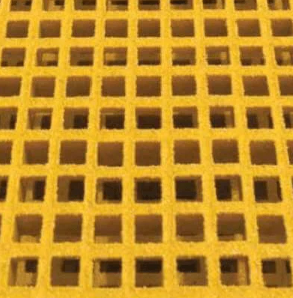
GRP offers a more practical solution. Options such as mini mesh GRP grating or solid-top GRP panels provide DROPS compliance without significantly increasing weight, maintaining ease of installation while meeting safety requirements.

Where Steel Still Has an Advantage
Steel remains the preferred option in specific scenarios, particularly where:
Very high point loads are required
Structural rigidity is critical
Extreme temperatures are involved


GRP has lower stiffness compared to steel, which can limit its use in heavy structural applications.
However, for the majority of walkways, access platforms, stairs, and guardrails, GRP meets required load and span criteria without issue.
Making the Right Specification Decision
Specifying GRP walkway systems involves evaluating load requirements, span distances, and deflection limits, typically aligned with Eurocode 1 (BS EN 1991).
While this approach may differ from traditional steel design under Eurocode 3, it allows for more precise, application-specific solutions rather than relying on default material choices.
Conclusion: Rethinking the Default Choice
The continued reliance on steel as the default material is largely driven by habit. But that habit comes with increased installation time, higher maintenance costs, and greater long-term risk.
For most industrial grating, walkway, and access system applications, GRP is now the technically and commercially superior choice—particularly in challenging environments.
If you're reviewing specifications or planning an upcoming project, understanding the full performance and cost implications of GRP vs steel grating can lead to better outcomes.
Kite Group supports both steel and GRP solutions, offering technical guidance, load calculations, and bespoke fabrication to ensure the right specification for each project.
Follow Kite Group on LinkedIn to stay updated on our safety solutions.
We offer Bespoke Services, Technical Support, and Same Day Despatch! Get in touch today!


